
The Pentagon’s FY2026 budget request totals $961.6 billion—a 13.4% increase over the previous year. Combined with reconciliation funding, total national defense spending now exceeds $1 trillion for the first time, reaching 3.3% of GDP. But there’s a problem: the defense industrial base can’t produce fast enough to keep up.
According to the Aerospace Industries Association’s 2025 report, manufacturers cite persistent shortages in rocket motors, guidance sensors, energetic materials, and specialized machining capacity. Many critical components lack secondary suppliers entirely. For procurement teams managing defense programs, this isn’t abstract—it’s a direct threat to production schedules and mission readiness.
Where the Money Is Going
This budget cycle represents a structural shift in defense priorities. The Department of Defense allocated $179 billion for Research, Development, Test, and Evaluation—a 27% year-over-year increase and one of the largest R&D investments in defense history. Munitions production received $6.5 billion for conventional weapons and $3.9 billion for hypersonic systems. The Golden Dome missile defense initiative alone carries a $25 billion allocation.
The defense program backlog now stands at $747 billion, up 25% in just two years. Commercial aerospace faces similar pressure, with Boeing and Airbus backlogs exceeding 15,300 aircraft—roughly a decade of production at current rates. The demand signal is clear and sustained. The question is whether the supply base can respond.
The Bottleneck Nobody Talks About
Defense spending headlines focus on platforms and programs. What rarely makes the news is the manufacturing constraint underneath. A January 2026 analysis from Area Development noted that “Tier-two and tier-three manufacturers faced the same requirements as prime contractors, but with fewer resources to absorb delays.” Power limitations, workforce gaps, and certification requirements that might be manageable for large firms become existential challenges at smaller scales.
The Pentagon recognizes this gap. The FY2026 National Defense Authorization Act established the Civil Reserve Manufacturing Network, allocating over $131 million to qualify commercial manufacturing facilities for defense production. The goal is to build what lawmakers called “ready-to-scale defense production”—a network of certified domestic suppliers who can surge capacity when programs demand it.
But certification takes time. ITAR registration, NADCAP accreditation, AS9100 compliance, and customer-specific qualifications can require years of investment before a supplier is approved to touch defense work. Companies without these credentials today face a long road before they can participate in the trillion-dollar opportunity.
What This Means for Procurement Teams
For supply chain managers at defense OEMs and Tier 1 contractors, the math is straightforward: production targets are rising while qualified supplier capacity remains constrained. The AIA report warns of “heavy reliance on sole-source providers for critical components,” creating program risk that compounds with every schedule slip.
Performance Software’s 2026 aerospace and defense outlook captured the shift: “Opportunities expand beyond prime contractors. Smaller suppliers and specialized technology firms are increasingly positioned to deliver discrete capabilities within larger programs, particularly where integration, speed, and upgradeability are critical.”
The differentiator, they noted, will be “disciplined execution under real-world constraints.” Suppliers who combine precision machining capabilities with the full certification stack—and the capacity to scale—are positioned to capture share as primes look to de-risk their supply chains.
The Certification Stack That Matters
Defense work requires more than technical capability. ITAR registration is mandatory for any manufacturer handling defense articles or technical data. NADCAP accreditation validates special processes like chemical processing and metal finishing meet aerospace standards. AS9100 certification demonstrates quality management systems aligned with aerospace requirements. JCP certification enables direct work on Joint Certification Program contracts.
Each credential represents years of process development, facility investment, and third-party audits. Together, they form the barrier to entry that keeps unqualified suppliers out—and creates sustained demand for those who hold them.
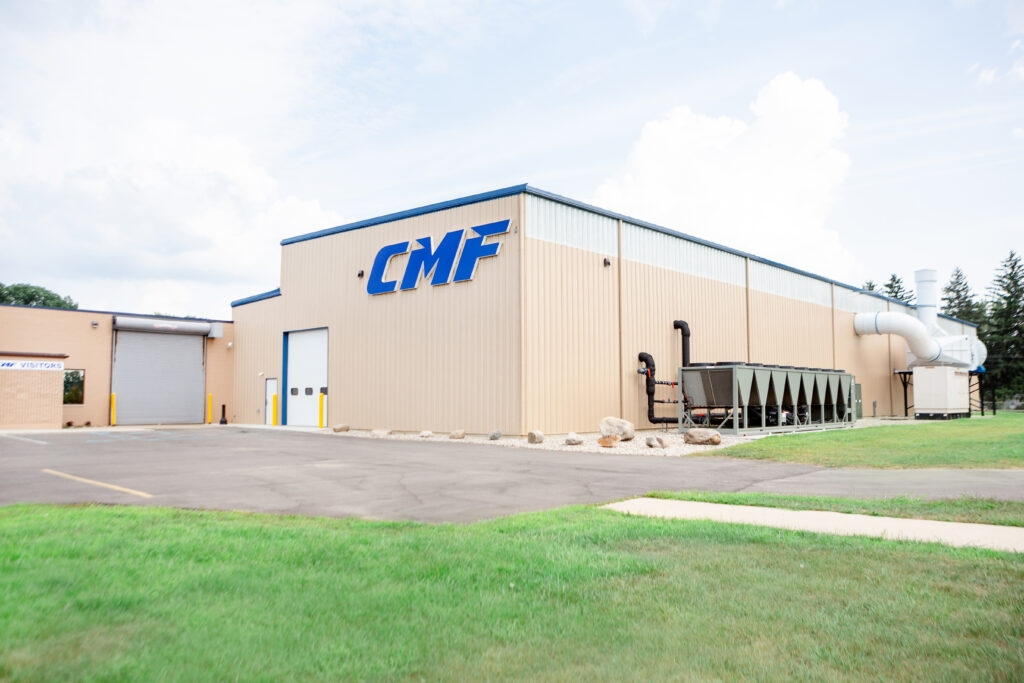
Domestic manufacturing adds another layer of value. With aluminum tariffs hitting 50% and supply chain security under increased scrutiny, U.S.-based suppliers eliminate both cost exposure and compliance risk. Facilities offering integrated machining, finishing, and assembly reduce handoffs and consolidate program risk under a single roof.
Evaluating Your Supply Base
The trillion-dollar defense budget creates opportunity—but only for suppliers positioned to capture it. Procurement teams should be asking: Which suppliers hold the full certification stack? Who has demonstrated capacity growth? Where are the single-source dependencies that threaten our production schedule?
The answers will determine which programs hit their milestones and which face the delays that have become too common across defense manufacturing.
Contact CMF Pro to discuss your defense manufacturing requirements and verify approved supplier status.